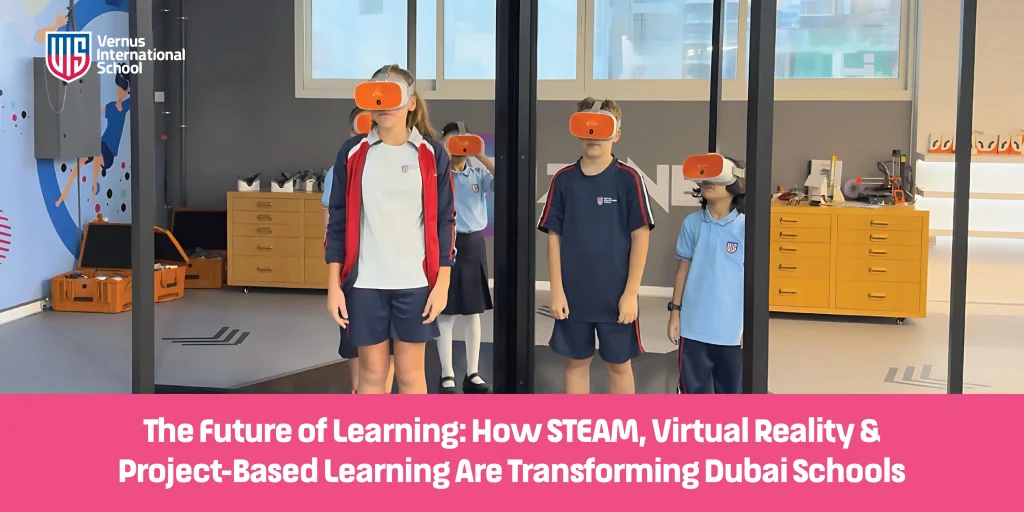
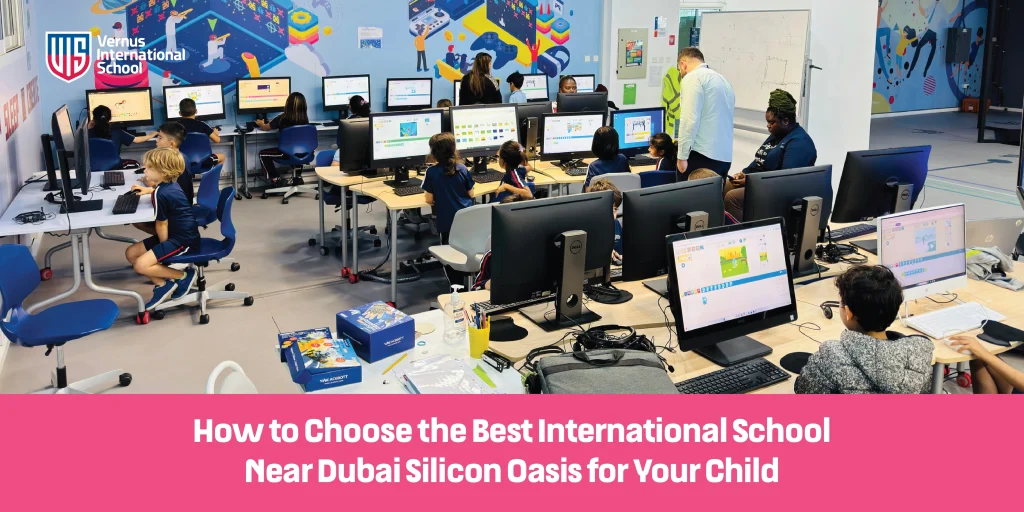
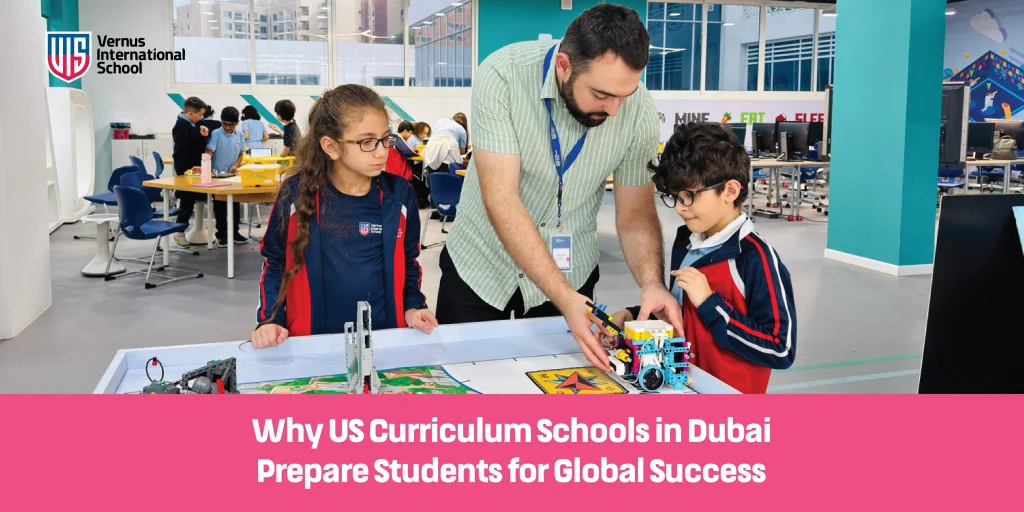
These techniques increase the interest, utility and meaning of learning. Students not only read from books, but also explore, create, experiment, and discover. Stem education schools in Dubai such as the Vernus International School (VIS) have developed their curriculum based on these future-ready learning practices to enable children to be confident learners and responsible global citizens. VIS is based on the California Common Core State Standards and also incorporates innovative teaching methods that equip students for the 21st century.
Why Modern Learning Matters More Than Ever
Technology is rapidly transforming the world. Students will need to be able to think critically, embrace new ideas, and solve complex problems in many future careers. These life skills are now being developed from a young age in school.
Learning at VIS is beyond the classroom. The curriculum is structured around three key strands:
- Learning Skills
- Life Skills
- Literacy Skills
These pillars support students to become not only good learners, but good citizens who are confident and responsible, prepared for further education and employment.
How STEAM Education Builds Future Skills
STEAM is an acronym for Science, Technology, Engineering, Arts, and Mathematics. STEAM brings together the subjects in a practical way and with real-life problems.
Students are not taught by rote. They apply their learning to create solutions, conduct experiments and develop an understanding of how subjects connect.
The VIS curriculum states that students will be developing the following skills through STEM learning:
- Critical thinking
- Problem-solving skills
- Creativity
- Collaboration
- Design thinking
- Confidence with technology
Students also become aware that technology is not to be feared, but understood and utilised. This provides them with a solid base for their future careers in a digital age.
Virtual Reality Makes Learning Come Alive
Envision walking through ancient cities virtually or visiting space without leaving the classroom. Virtual Reality (VR) does just that.
Virtual reality based learning is a part of the school’s innovative learning environment in VIS. Students access VR experiences with a curriculum connection in order to grasp concepts and ideas in a deeper way.
Here are some VR experiences that are included:
- Exploring Petra
- To visit the International Space Station
- A Mission to Mars
These experiences are engaging and enhance communication, creativity, critical thinking and problem solving. Students have better retention of lessons when they learn through experience rather than from reading.
Project-Based Learning Helps Students Learn by Doing
Project-Based Learning (PBL) is among the biggest transformations in contemporary education.
Students do not listen to lengthy lectures, but rather engage in meaningful projects to address real-world problems. They investigate, question, trial and error, and share their results.
Project-Based learning is part of the curriculum at VIS. The teacher guides, and the students actively participate in the learning process.
Some benefits of project based learning schools Dubai include:
- Better teamwork
- Stronger communication skills
- Greater confidence
- Improved research abilities
- Better decision-making
- Real-world problem-solving experience
This helps children not only to know what they are learning, but also why it is important.
Technology Creates Smarter Classrooms
Modern classrooms are becoming more interactive than ever.
VIS adopts technology to produce a blended learning experience which integrates traditional teaching with technology. Students are engaged throughout the lesson using interactive displays, literacy-rich classrooms and technology-enabled learning.
The school’s Innovation Lab (iHub) provides students with opportunities to explore:
- Robotics
- 3D printing
- Minecraft
- Virtual Reality
- Creative technology projects
These activities allow students to practice, experiment and think independently, and to acquire skills that are applicable beyond the classroom.
Preparing Students for the Future
Learning is not just about passing exams these days. It’s about life preparation for children.
Today’s schools recognise the importance of students learning academic content and also learning to be creative, confident, cooperative, communicative, and flexible.
Stem education schools in Dubai such as VIS uses STEAM education, PBL, VR, and technology to give students a fun learning environment where they develop skills they can use for a lifetime.
This integrated approach will enable children to be inquisitive learners, confident thinkers and future innovators ready for the next opportunity.
Conclusion
Education’s future is now. Dubai schools are transforming the learning experience by making education relevant, interactive and practical for children. Students are not only required to read books but are also encouraged to think, to solve problems, and to be confident in using technology.
In Vernus International School, STEAM education, Virtual Reality and Project-Based Learning are integrated to provide thrilling learning experiences that are designed to help students succeed in their education and in their lives. These creative and innovative methods will continue to influence the future generation of creative thinkers, problem solvers and future leaders as education continues to evolve.
FAQs
- What does STEAM education mean?
STEAM education integrates Science, Technology, Engineering, Arts and Mathematics to teach students to learn through doing, creativity and problem solving rather than memorisation.
- What are the benefits of Virtual Reality in the classroom?
VR enables students to have an immersive learning experience in a virtual 3D environment. This makes learning more interesting, more understanding and aids in the retention of concepts.
- What is Project Based Learning?
Project-based learning (PBL) is an instructional approach that requires students to learn through a real-world project. It builds research, team, communication and critical thinking skills and increases the meaningfulness of learning.
- Why are modern teaching methods important for students?
By enabling students to develop the skills necessary for their future education and employment, modern teaching methods will help prepare them for the future. Modern teaching methods will help students to build future-ready skills, including creativity, collaboration, critical thinking, digital literacy, and problem-solving, which will equip them for higher education and future careers.